RESEARCH REPORT
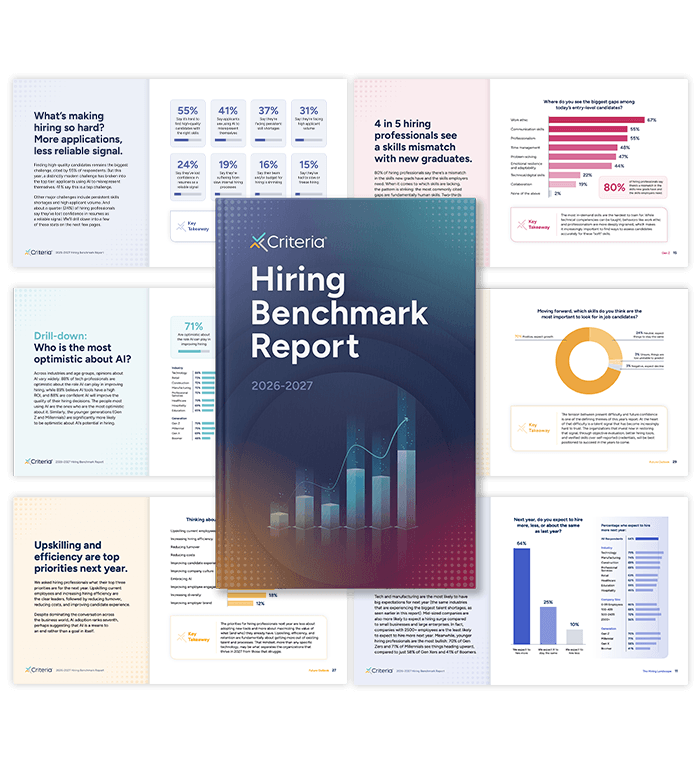
2026-2027 Hiring Benchmark Report
Insights from 1,000+ Hiring Professionals
Hiring in 2026 is full of contradictions. More organizations are planning to grow their teams, yet most say hiring is harder than last year. AI is reshaping both sides of the hiring table, and Gen Z is challenging old assumptions about workplace readiness. Now in its 9th year, our largest report yet breaks down what 1,027 hiring professionals told us.
Why This Report Matters
Hiring professionals are navigating more noise and less reliable signal than ever before. Resumes are easier to game, applicant volumes are climbing, and AI is changing the rules for employers and candidates alike. At the same time, the workforce itself is shifting, with Gen Z bringing new expectations and new gaps for employers to address.
This report gives you the data to cut through the noise so you can:
- Understand why hiring feels harder, even as headcount plans grow
- See how AI is already reshaping screening, assessments, and entry-level roles
- Get a clear read on Gen Z readiness, straight from hiring professionals and Gen Z workers themselves
- Benchmark your own AI adoption and concerns against your industry peers
- Plan your 2027 priorities around what's actually driving hiring success
The organizations that pull ahead in 2027 will be the ones that trade guesswork for evidence and get to a place where they can trust the signal their hiring process gives them, especially in an AI-saturated market.

Key Insights
A sneak peek at what you'll find inside the full report.
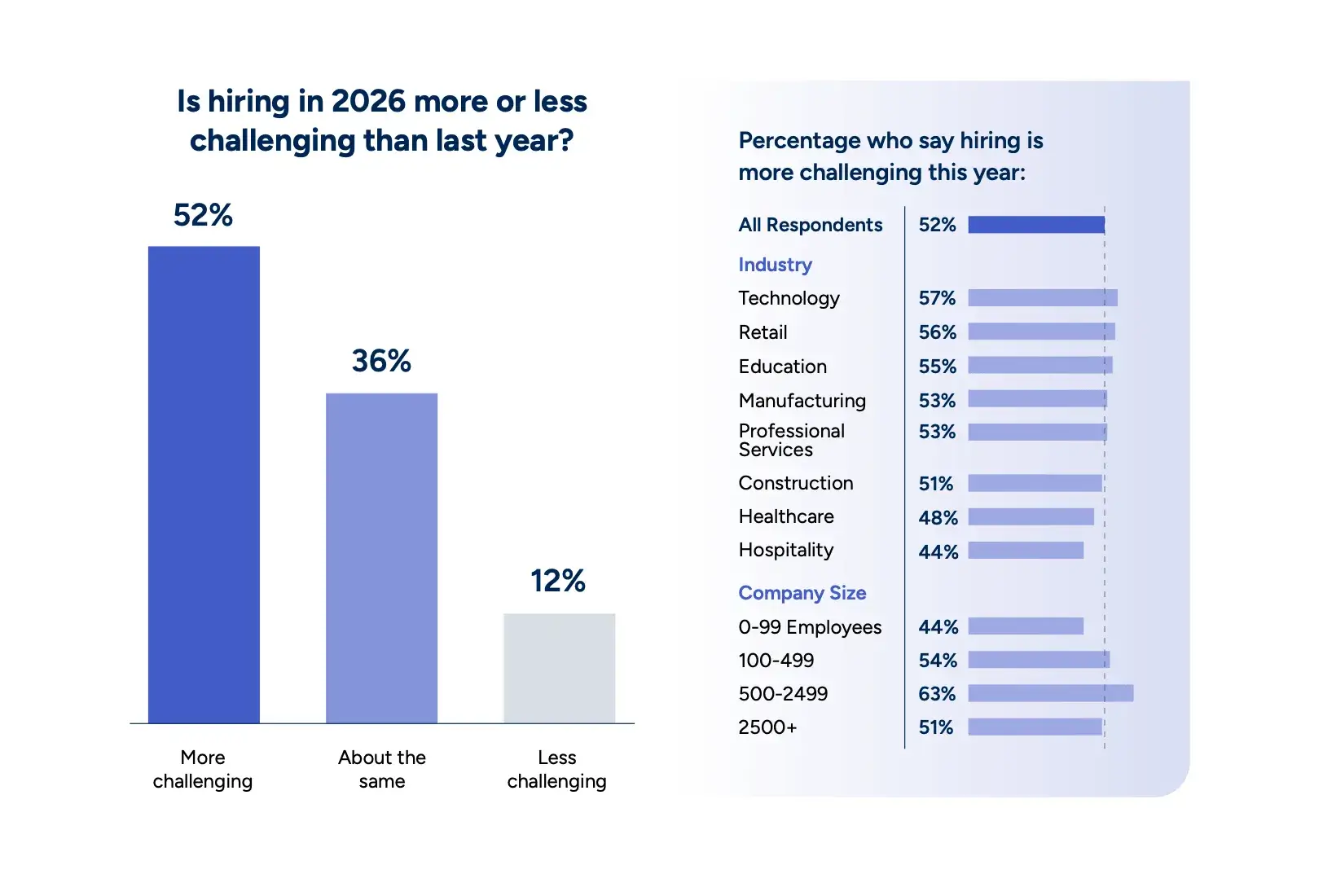
More than half of hiring professionals say hiring is harder in 2026.
52% say hiring is more challenging than it was last year, compared to just 12% who say it's easier. Mid-sized companies and the tech and retail industries are feeling it most.
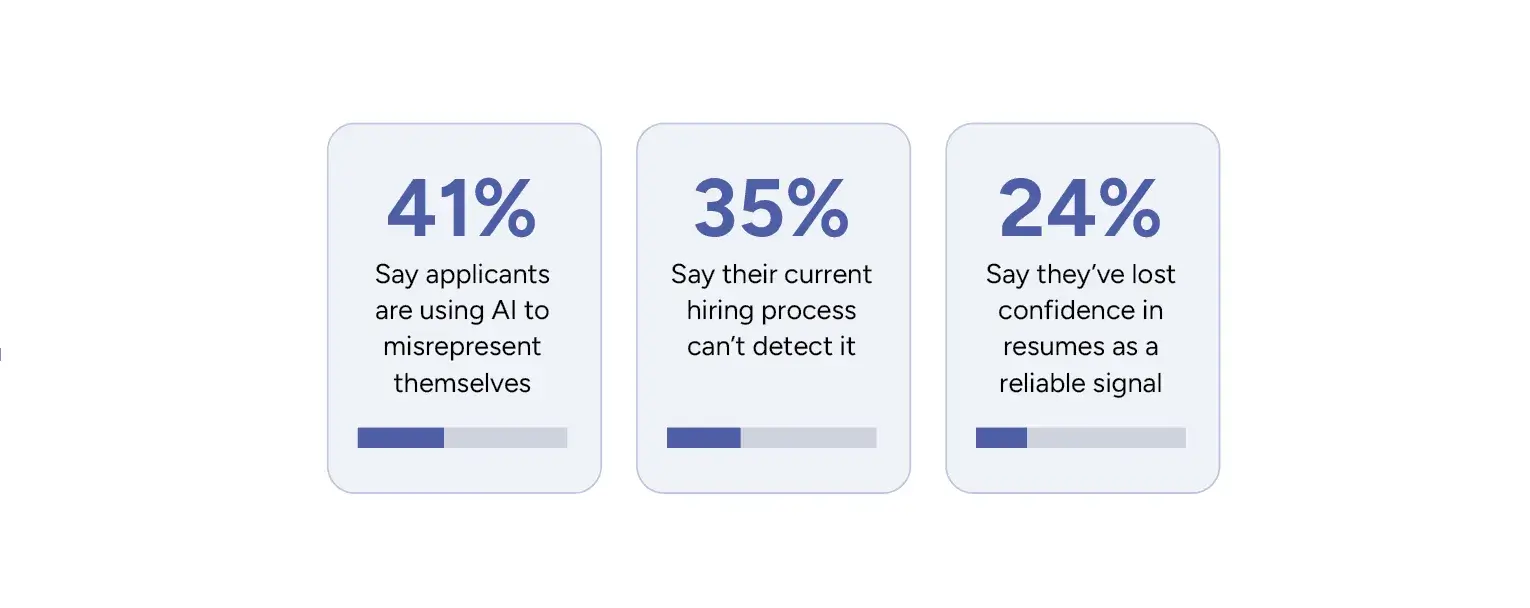
4 in 10 hiring professionals are struggling with candidates using AI to misrepresent themselves.
And over a third of employers can't reliably catch it. It's a big reason nearly a quarter of hiring professionals say they no longer trust the resume as a reliable signal.
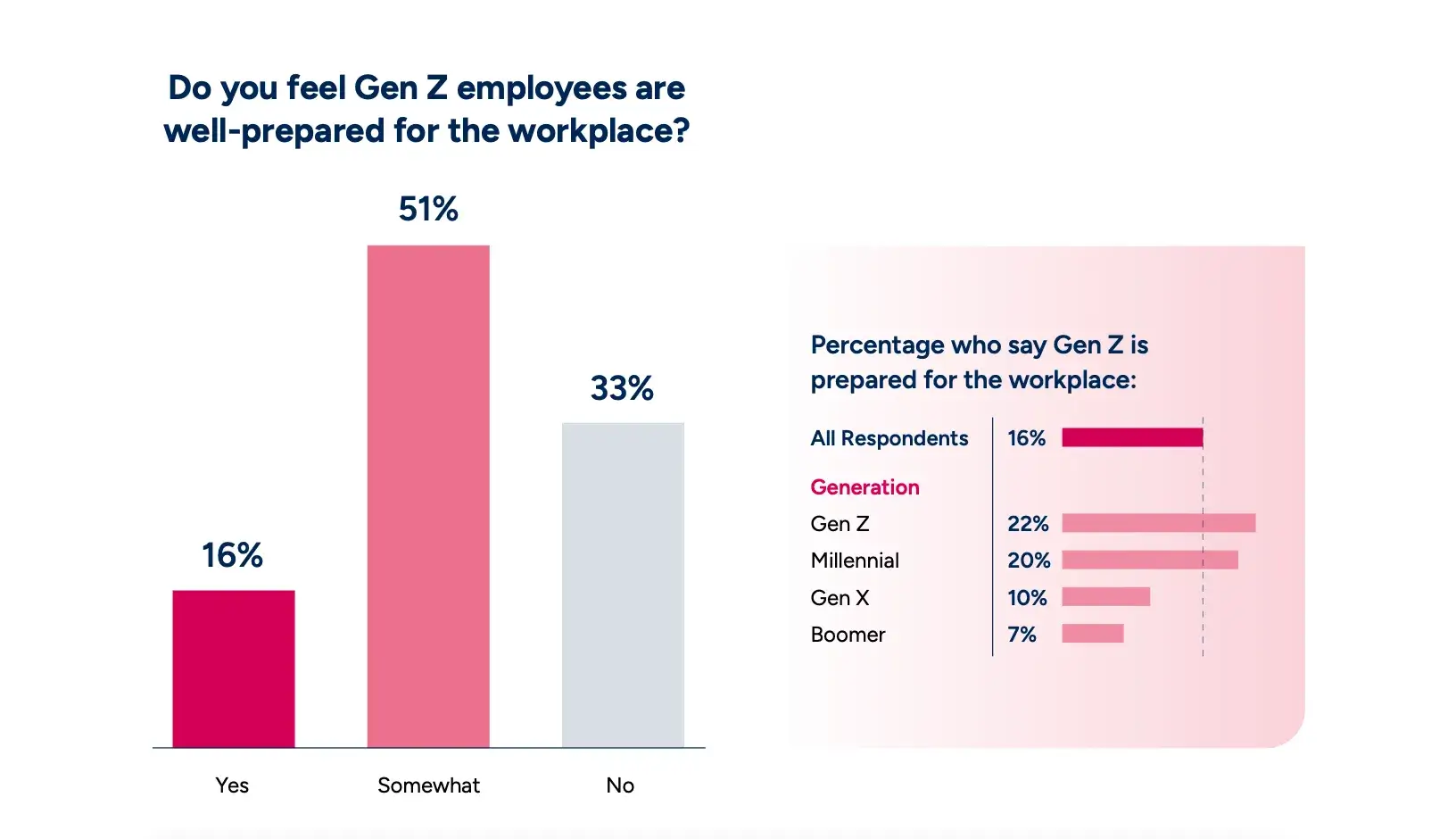
Only 16% of employers think Gen Z is well prepared for the workplace.
Half say Gen Z is only somewhat ready, and a third say not at all. Even Gen Z respondents aren't fully convinced: just 22% say their own generation is prepared.
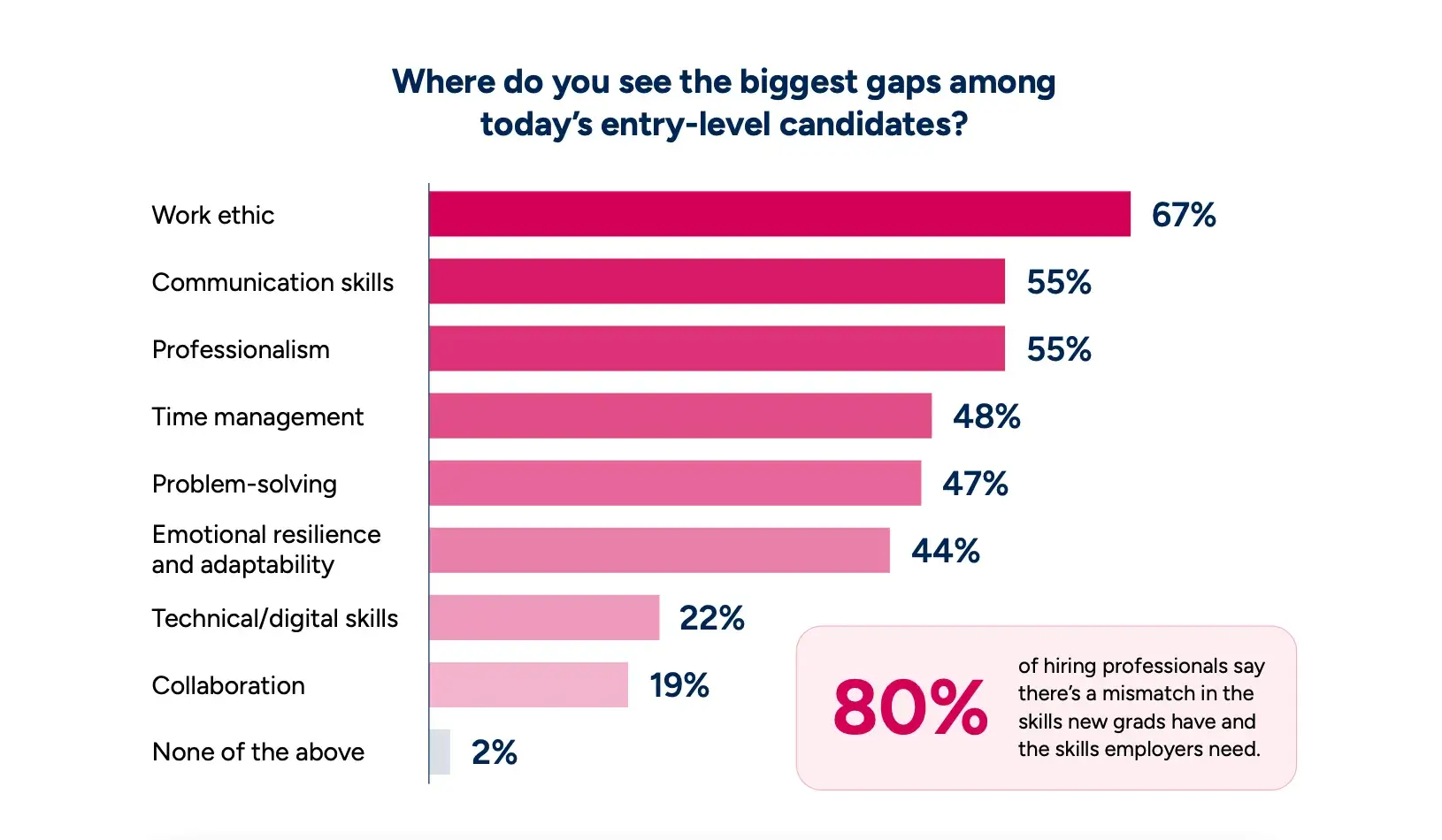
4 in 5 hiring professionals see a skills mismatch in new graduates.
And the biggest gap isn't technical. Work ethic tops the list at 67%, well ahead of communication skills, professionalism, and technical or digital skills.
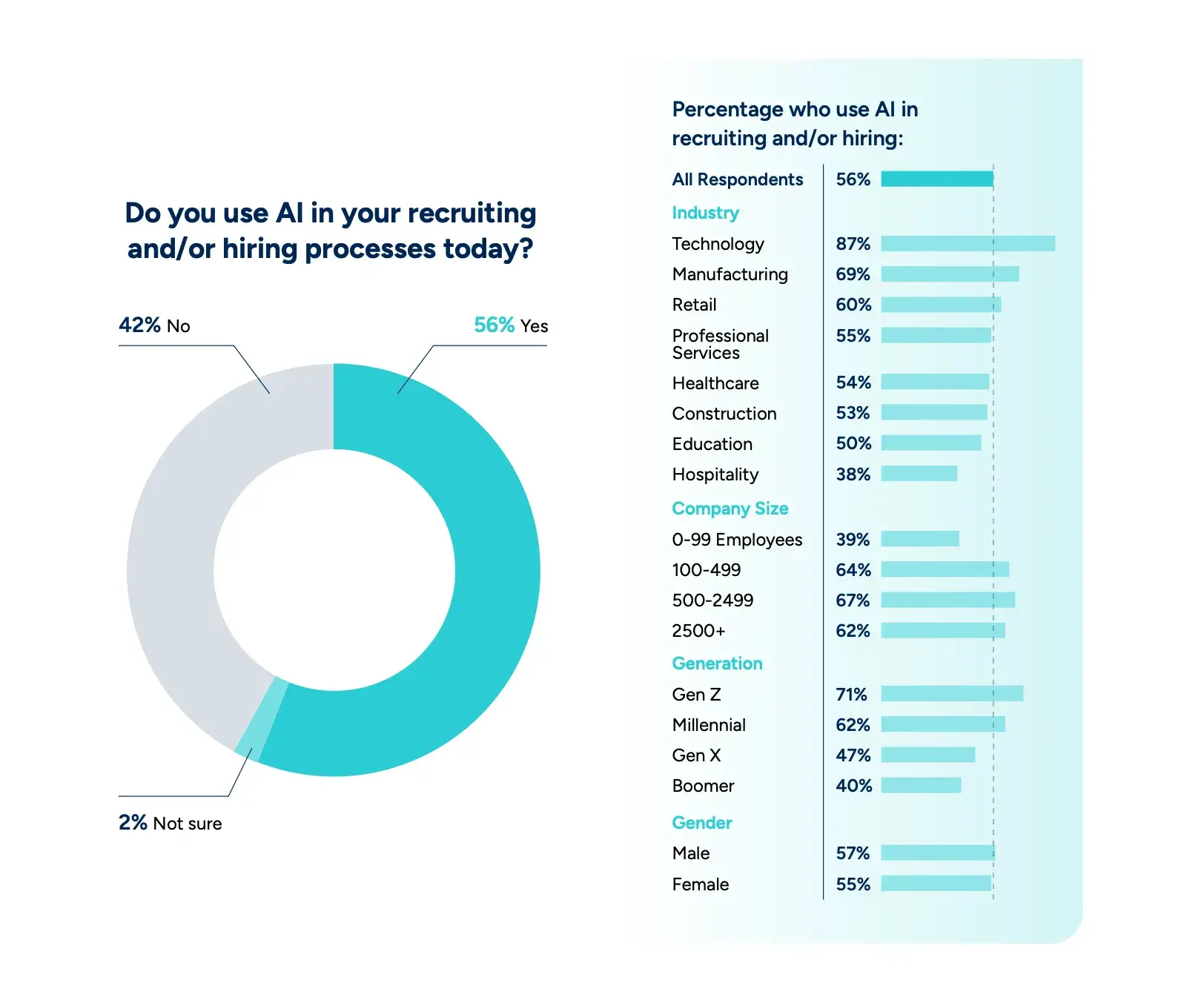
More than half of hiring professionals now use AI in hiring.
56% have adopted AI in some part of their process, led by tech at 87%. Screening is the most common use case at 46%, followed by assessments and scheduling at 35% each.
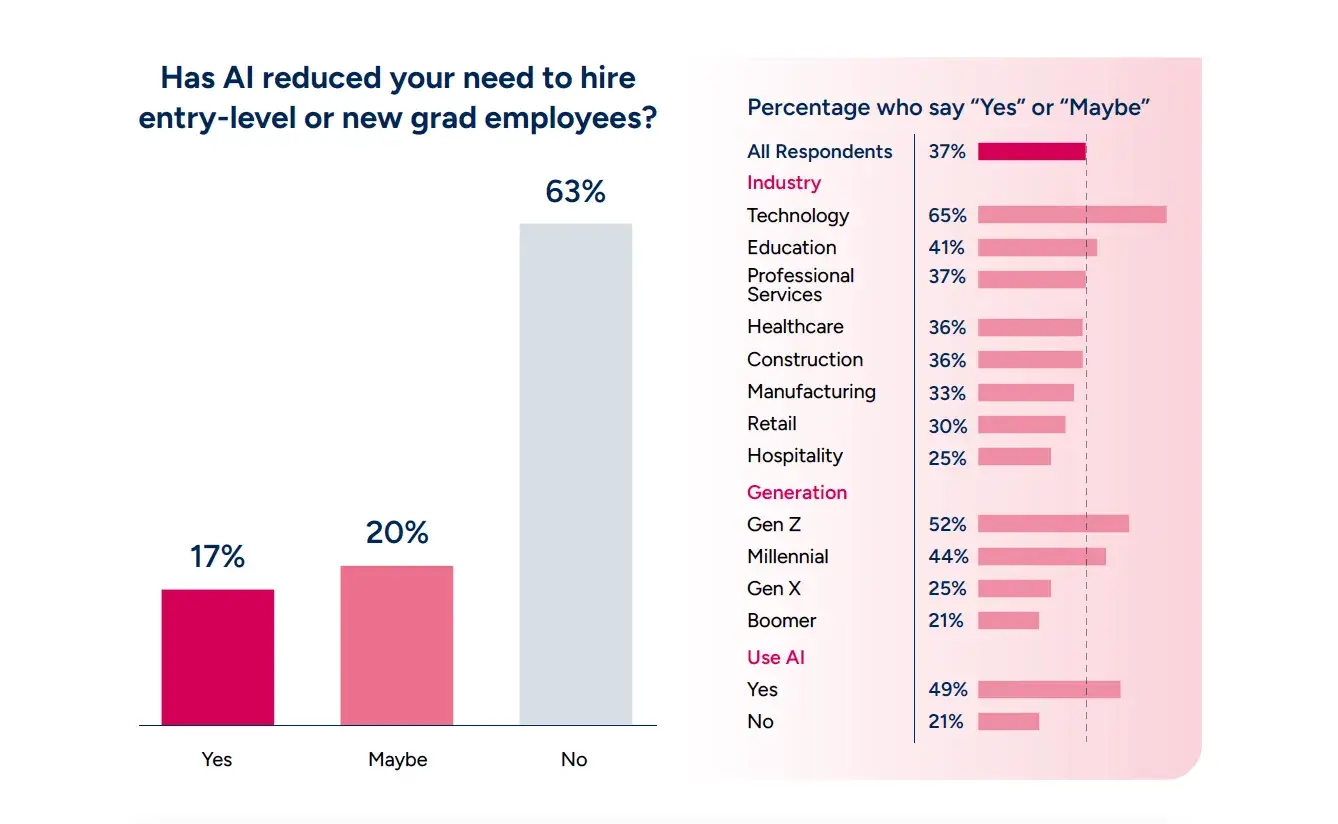
37% say AI may be reducing the need for entry-level hires.
That number jumps to 65% in tech. Organizations already using AI in hiring are more than twice as likely to say entry-level need has dropped as those who aren't.
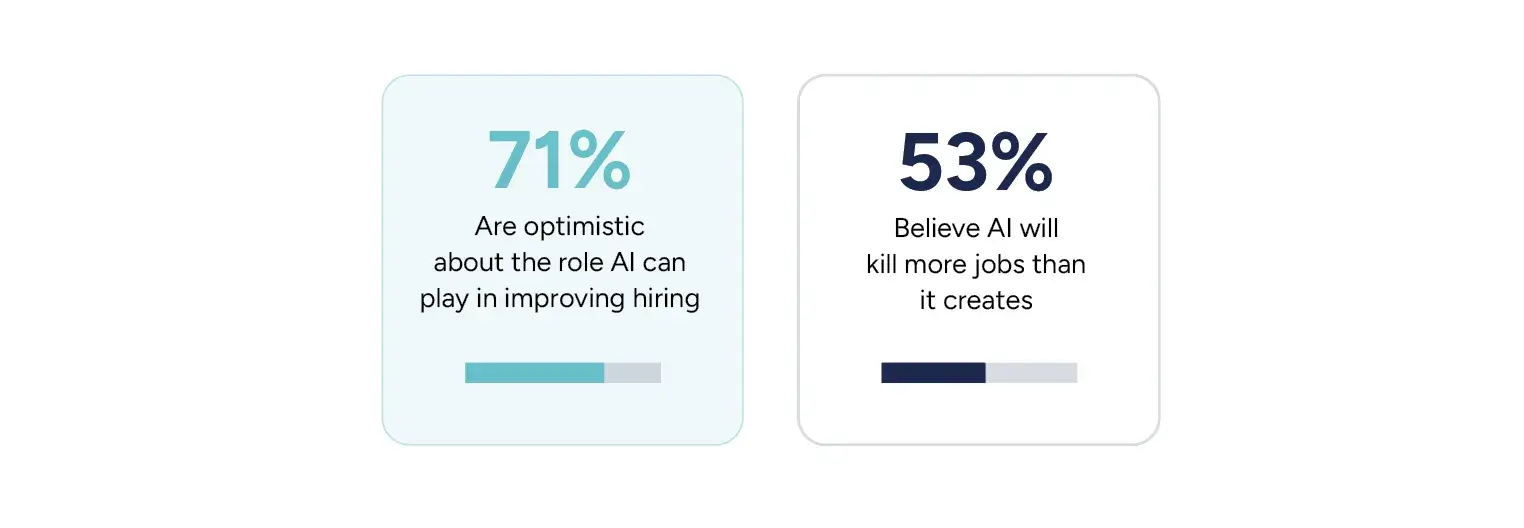
71% are optimistic about AI's role in hiring. 53% still worry about its cost to the job market.
Most hiring professionals believe AI can improve hiring decisions and deliver strong ROI, while a slim majority also believe AI will eliminate more jobs than it creates.
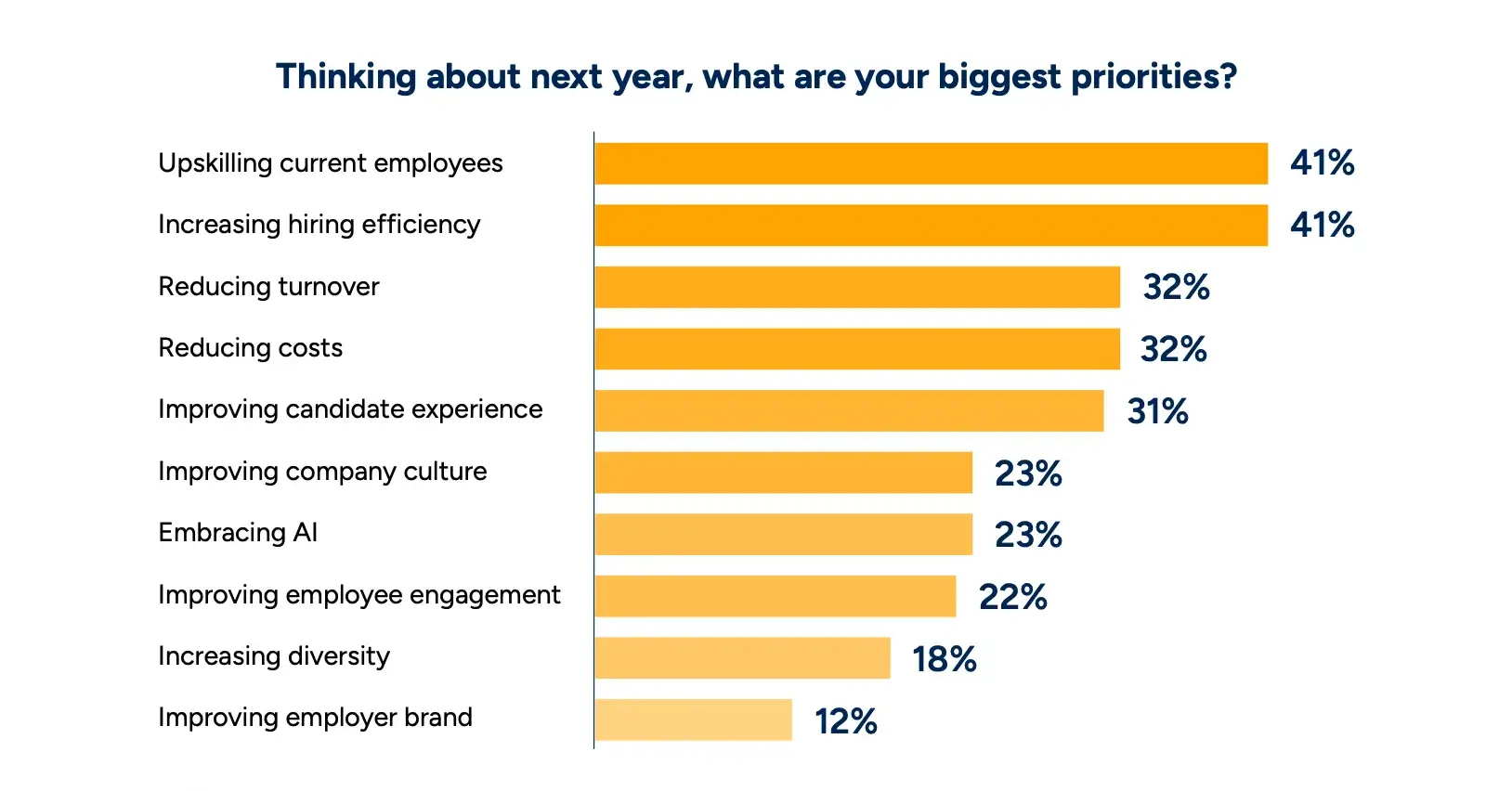
Upskilling and efficiency are the top priorities for 2027.
Hiring professionals are focused on getting more from the talent and processes they already have. Upskilling current employees and increasing hiring efficiency tie for the top spot, ahead of reducing turnover, reducing costs, and improving candidate experience.
Get Your Copy
If you want to understand where hiring is headed and how AI, Gen Z, and a shifting talent signal are changing the rules, this report is your roadmap. Get the data-backed insights you need to hire smarter in 2027.
About Criteria
Criteria empowers organizations of all sizes to hire and develop top talent with science-backed assessments, structured interviewing, and employee development tools. With over 20 years of expertise, we’re committed to helping companies identify true candidate potential - so they can build stronger, more successful teams.